


Fire training is one of those things that’s easy to overlook, but it’s super important for keeping your staff, premises, and business safe. Even businesses that think they’ve got it covered can make simple mistakes that reduce how effective their training actually is. Here are the top five fire training mistakes we see and some tips on how to avoid them.
Getting Complacent During Drills
Drills are only useful if people take them seriously. Some common slip-ups include:
Ignoring the alarm: Assuming it’s just a false alert or a test can waste precious time.
Not gathering at assembly points: People often don’t even know where the assembly point is!
Going back for personal items: This can put employees in real danger.
Using lifts or wrong exits: Panicked staff sometimes use unsafe routes instead of stairs, causing congestion.
Treating drills like a social break: If staff aren’t engaged, they won’t know what to do in a real emergency.
Skipping Regular Training
Fire training isn’t a one-and-done thing. Some businesses forget:
Annual refresher courses: Without these, staff can forget key procedures.
How to use fire equipment: Everyone should know the PASS technique (Pull, Aim, Squeeze, Sweep) and which extinguisher to use.
Recognising fire hazards: From overloaded sockets to flammable storage, staff need to spot risks.
Procedural and Environmental Slip-Ups
Sometimes the environment itself or unclear procedures cause problems:
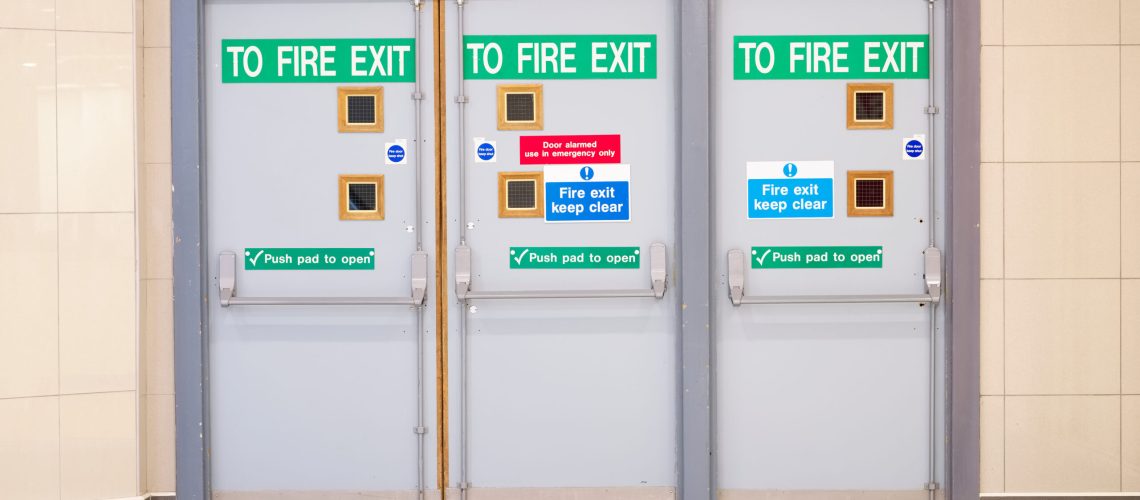
Blocked exits: Keep escape routes clear – it sounds obvious, but it happens!
Assuming others will act: Fire safety is a shared responsibility, not just management’s job.
Neglecting checks: Fire doors, emergency lighting, and alarms need regular attention.
Outdated plans: Evacuation plans must match the current layout of the building.
How to Get It Right
Proper fire training is all about preparation, confidence, and making sure everyone knows what to do. Here’s what helps:
Run realistic drills regularly: Annual surprise drills are ideal.
Include fire training in new hire induction: Every new employee should know the right procedure asap.
Use clear signage: Photoluminescent signs help guide staff, even in the dark.
Train fire wardens properly: Make sure they’re confident in leading evacuations.
Keep maintenance logs: Track fire equipment checks, alarm tests, and risk assessments.
Fire Training is About More Than Compliance
Fire training isn’t just a legal requirement – it’s about keeping people safe and helping everyone feel confident in an emergency. At Saracen Fire Protection Ltd, we provide friendly, practical fire training for businesses, covering drills, equipment use, and evacuation procedures. That way, you can avoid common mistakes and have peace of mind knowing your premises and people are protected.